Why the theme Space makes a good book
An adventure that suits the child
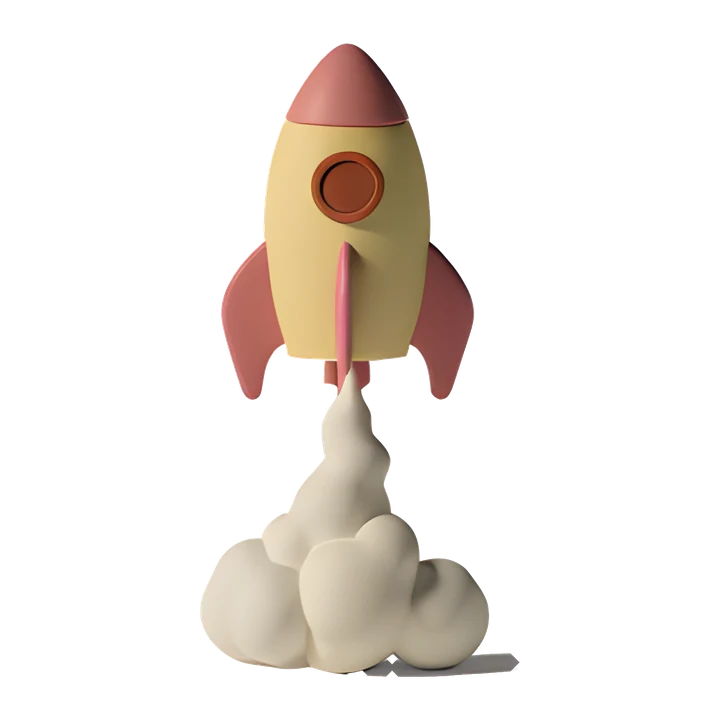
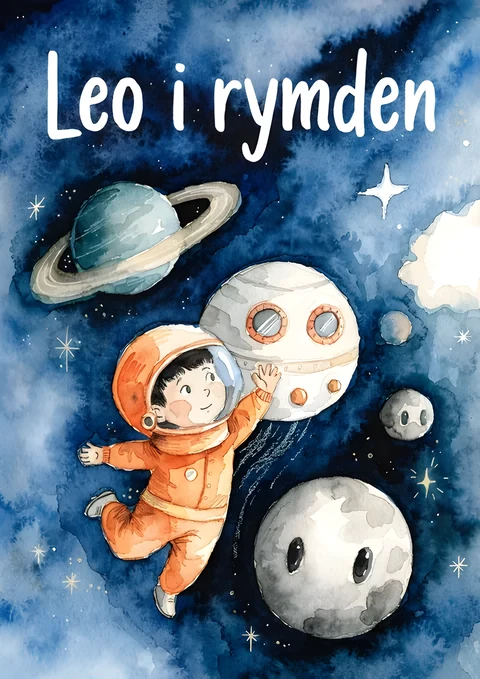
Space is the biggest thing there is, and children know it. The black sky, stars that are faraway suns, planets with rings – it's all so vast that the questions never run out. A book about space lets your child sit in a rocket, float weightless and step out onto an alien planet. At the same time, space is real: people have walked on the Moon, and robots have trundled around on Mars. That makes the adventure both dreamy and easy to link to things that truly exist.
Missions among the stars
In a space book your child can fly to the Moon and plant a flag they drew themselves, visit a tiny planet whose only inhabitant wants a friend, or steer through an asteroid belt. Perhaps a satellite has broken and your child has to go on a spacewalk, or an alien lands in your garden and needs help finding its way home. The idea Rocket to the moon shows how a journey like that can begin and end.
A crew from home
A space journey is more fun with a crew your child knows. Brothers and sisters can be navigator and engineer, a parent can sit in mission control and the dog can be a space dog in its own suit. Write in your child's favourite planet, if they have one, or what your child tends to ask about when you look at the night sky together. A name for the rocket makes a big difference – let your child choose it. If your child has glow-in-the-dark stars on the ceiling, they can become the constellation the rocket steers by.
For a two-year-old, space is about light and dark, up and down, and a moon that says goodnight. Pre-schoolers love blasting off, landing and coming home. Six-year-olds and up enjoy a problem that has to be solved with clever decisions, and ten-year-olds can handle suspense: an engine that cuts out, a signal nobody understands. And everyone, whatever their age, loves counting down to lift-off.
Lighter on the Moon
On the Moon, gravity is about one sixth of what it is on Earth. A bathroom scale that shows eighteen kilos here would show only about three kilos for the same child on the Moon, and the child could jump much higher. Go outside on a clear evening and find the Moon together. With ordinary binoculars the craters show up clearly. Talk about what you would pack in your rucksack for a trip there. The Moon is, by the way, the only place beyond Earth where people have walked. If you're lucky, you might also spot the International Space Station gliding past as a fast, steady point of light.
Your child is the hero
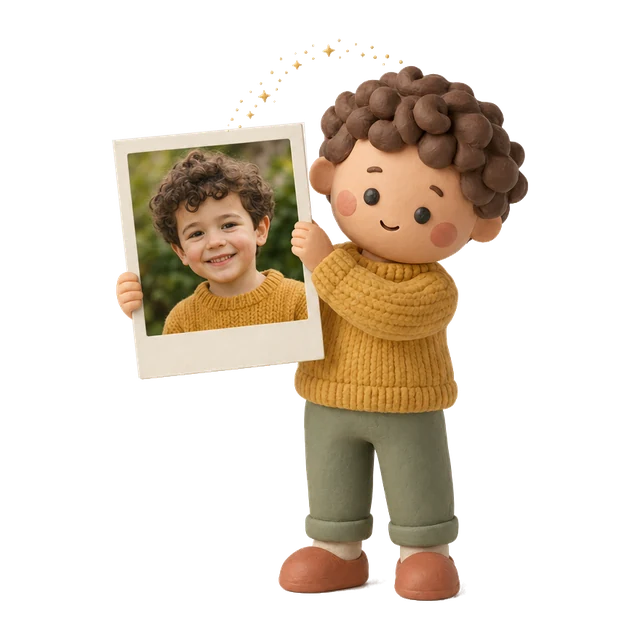
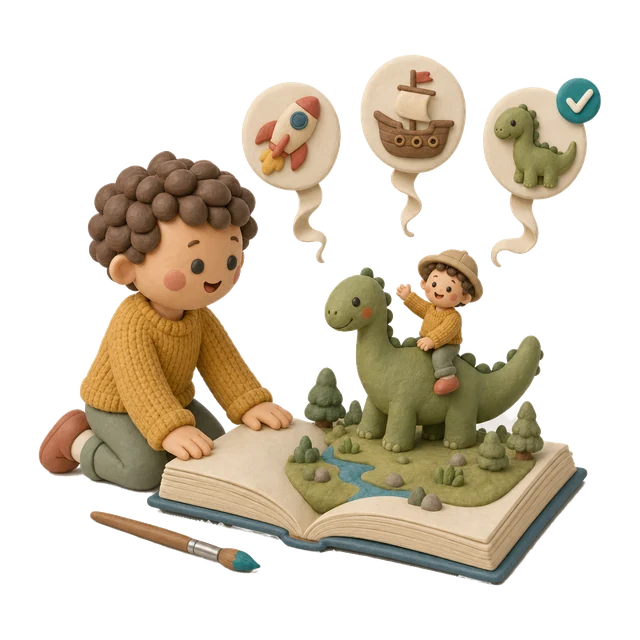
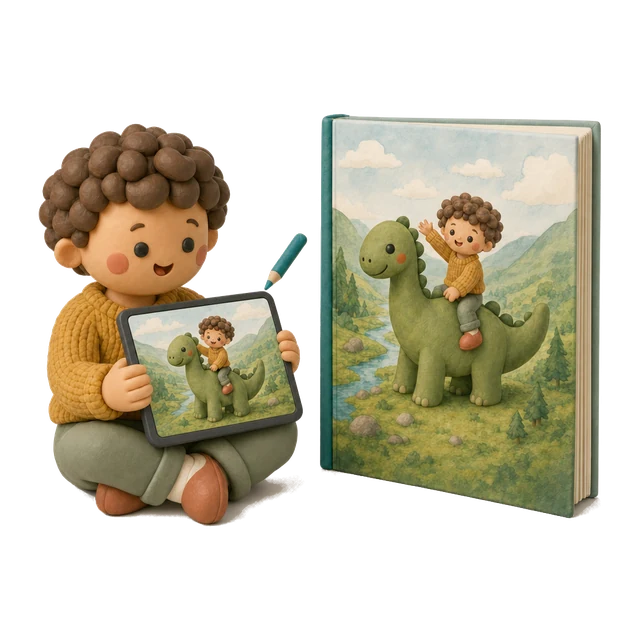
You fill in the child's name, age and what they like, and upload a photo. The story about space is written for your very own child, and the thirteen pictures and the cover are drawn from the photo in the style you choose. Brothers and sisters, parents, grandparents or the pet can come along, up to five characters. If you would like to include something that has happened lately, a trip or a lost tooth, just write it and it is woven in.
From eBook to hardback book
The eBook is ready a few minutes after payment. Read it, change the text and ask for new pictures until you are happy. Then order it as an A4 hardback book, printed and sent to your door, or straight to the child as a gift. Do add the audiobook or the colouring pages. Start creating the book or read more about the prices. Would you like to see a finished book before you decide? Browse our example books.
How the story could begin
The countdown sounds in your helmet. “Ten, nine, eight …” You're lying on your back in a seat shaped to fit your body, and through the little window you can see only blue sky. At three it starts to shake. At one you're pressed into the seat so hard you can't lift your arms. Then, after a moment that feels both long and short, everything goes still. Your pencil floats out of your pocket and spins slowly in front of your face. Outside the window the sky isn't blue any more. It's black, and the Earth lies below you, round and blue with white swirls of cloud. The radio crackles. “Captain,” says a voice from the ground, “we've picked up a signal from a planet nobody has visited. It's saying your name.”
 Christmas
 Birthday
 Unicorns
 Dinosaurs
 Pirates
 Space
 Princes and princesses
 Fire brigade
 Sport
 Mermaids
 Superheroes
 Knights and dragons
 Construction vehicles
 Starting school
 A trip to the farm
 Jungle
 Fairies
 Treasure hunt
 Underwater
 A new baby
 Brushing teeth
 Confidence
 Bedtime story
 The enchanted forest
 Witches and spells
 Giants
 Gnomes
 Wizard school
 Camping
 Time travel
 Haunted house
 Police
 Racing
 Aeroplanes
 Secret mission
 The zoo
 Dressing up
 Building a tree house
 The amusement park
 A train journey
 A visit to the doctor
 The dentist
 The library
 The beach
 The forest
 Baking
 Music
 Dance
 Ancient Egypt
 The Stone Age
 The Vikings
 In the future
 The Middle Ages
 Candy land
 At the North Pole
 The savannah
 Easter
 Halloween
 Lucia
 Midsummer
 New Year
 Name day
 Eid
 Hanukkah
 Becoming a big brother or sister
 Father's Day
 Mother's Day
 Grandparents
 A new pet
 Moving house
 Sleepovers
 A wedding
 Holiday
 Learning to ride a bike
 Giving up the dummy
 Potty training
 Tidying up
 Eating well
 Learning to tell the time
 Learning to count
 The alphabet
 Seasons and weather
 Afraid of the dark
 Tantrums
 Feeling homesick
 Being teased
 Jealousy
 Feeling proud
 Handling big feelings
 Funny story
 Olivia
 Muhammad