Why the theme Christmas makes a good book
An adventure that suits the child
Christmas has more rituals than almost any other time of year, and children love rituals. The advent calendar opened one door at a time, the smell of mince pies, the tree carried in, the stocking hung up, Father Christmas arriving in the night. Everything follows an order your child can recognise and look forward to. A Christmas book with your child as the main character weaves your own traditions into an adventure, perhaps with a Santa who needs a proper helper. It works especially well during Advent, when the waiting feels longest and the evenings are at their darkest.
What can happen before Christmas Eve?
A Christmas story can begin long before the big day: with the advent calendar, Christmas crafts, the nativity play at nursery, a letter to Santa that has to be posted in time. Then it can take a turn – a Santa who has lost his list, a reindeer stuck in a snowdrift, a present left at the wrong house that must be delivered before nightfall. A quieter path is the waiting itself: a child opening doors, counting days and trying to stay awake to catch a glimpse of Father Christmas.
The book likes to end where Christmas feels strongest: in a warm room with lights in the windows and someone knocking at the door. The idea Santa's Lost List builds on exactly that.
Your Christmas, nobody else's
In Britain the big day is Christmas Day, with stockings in the morning and dinner later on, but every family does it their own way. Tell us what it looks like in yours: whether you stay at home or go to relatives, what is on the table, whether presents wait under the tree or at the foot of the bed. Bring in brothers and sisters, cousins, a grandad who always nods off in the armchair or a dog who pinches a pig in blanket.
If your child celebrates Christmas in two homes, the story can hold both. If the family has roots in a country where presents come on Christmas Eve, or on 6 January, or where the food is completely different, the book can follow that instead.
Believing in Santa, and Twelfth Night
For the youngest, Christmas means lights, sparkle and a present to rip open, and short rhyming lines suit them well. Pre-schoolers are right in the middle of believing in Father Christmas and would love him to be real in the story. School-age children can have an adventure with a map and a clock, and older ones a mystery your child solves before anyone else.
Something to share afterwards: in Britain the decorations traditionally come down by Twelfth Night, at the start of January, and leaving them up longer is said to bring bad luck. Ask which Christmas tradition your child likes best, and whether there is a new one you would like to start.
Your child is the hero
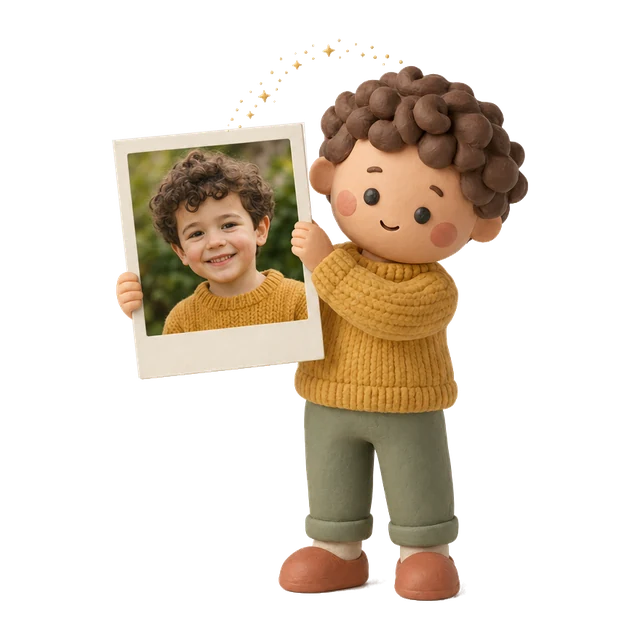
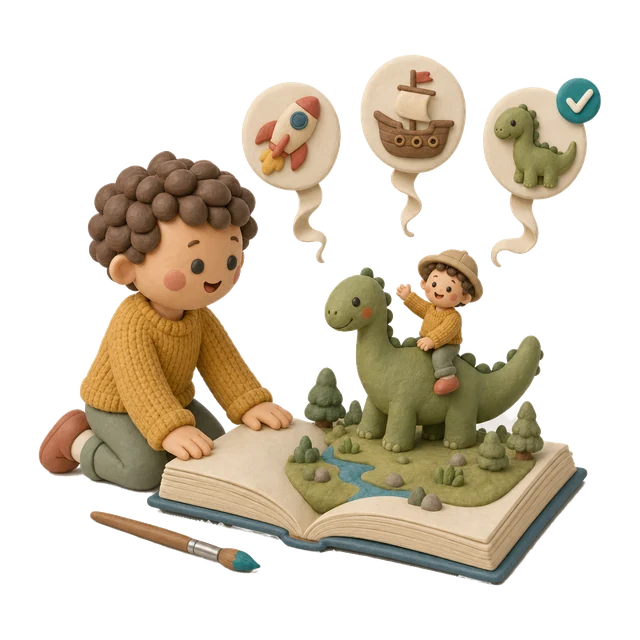
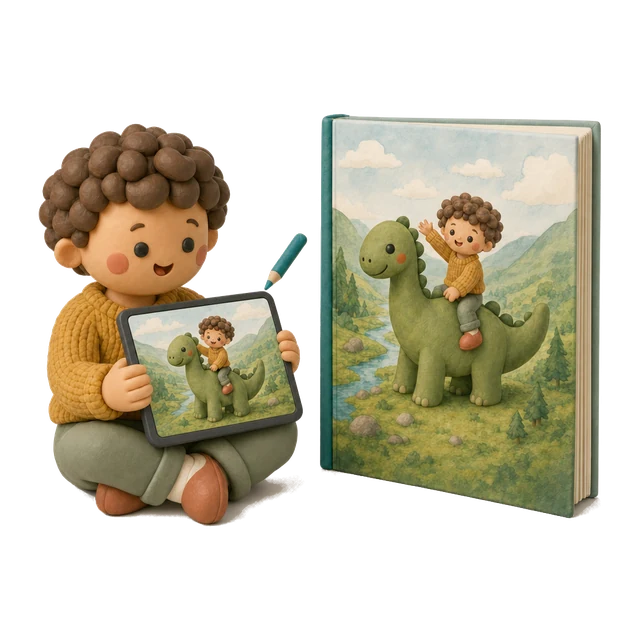
You fill in the child's name, age and what they like, and upload a photo. The story about Christmas is written for your very own child, and the thirteen pictures and the cover are drawn from the photo in the style you choose. Brothers and sisters, parents, grandparents or the pet can come along, up to five characters. If you would like to include something that has happened lately, a trip or a lost tooth, just write it and it is woven in.
From eBook to hardback book
The eBook is ready a few minutes after payment. Read it, change the text and ask for new pictures until you are happy. Then order it as an A4 hardback book, printed and sent to your door, or straight to the child as a gift. Do add the audiobook or the colouring pages. Start creating the book or read more about the prices. Would you like to see a finished book before you decide? Browse our example books.
How the story could begin
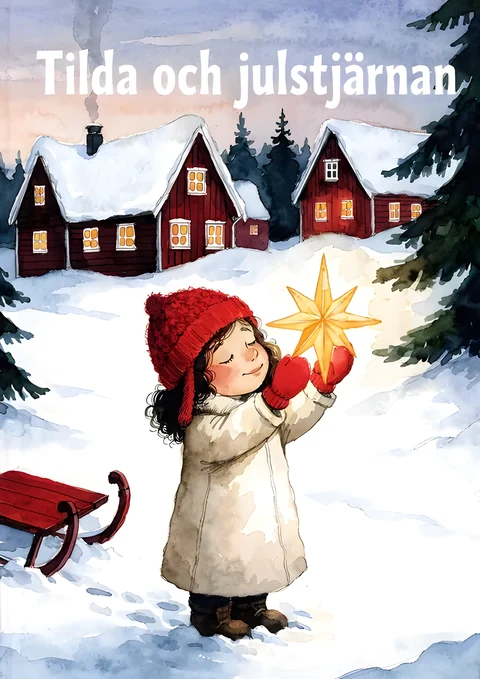
The snow has come in the night. When you open the back door, the step has vanished under a white, fluffy blanket, and everything is so quiet you can hear your own breathing. You are carrying a carrot and a mince pie on a plate, because that is how it works: Santa and his reindeer must have their share. You trudge down the garden with the plate in both hands, and the snow crunches under your wellies. Halfway there, you stop. In the snow in front of you is a trail. Small footprints, no bigger than yours, that start in the middle of nowhere and end at the shed door. The door is ajar. Inside, a lantern is glowing, and someone is muttering. “Four hundred and twelve, four hundred and thirteen … No. No, no, no. It's gone.” It sounds like someone who has lost something very, very important.
 Christmas
 Birthday
 Unicorns
 Dinosaurs
 Pirates
 Space
 Princes and princesses
 Fire brigade
 Sport
 Mermaids
 Superheroes
 Knights and dragons
 Construction vehicles
 Starting school
 A trip to the farm
 Jungle
 Fairies
 Treasure hunt
 Underwater
 A new baby
 Brushing teeth
 Confidence
 Bedtime story
 The enchanted forest
 Witches and spells
 Giants
 Gnomes
 Wizard school
 Camping
 Time travel
 Haunted house
 Police
 Racing
 Aeroplanes
 Secret mission
 The zoo
 Dressing up
 Building a tree house
 The amusement park
 A train journey
 A visit to the doctor
 The dentist
 The library
 The beach
 The forest
 Baking
 Music
 Dance
 Ancient Egypt
 The Stone Age
 The Vikings
 In the future
 The Middle Ages
 Candy land
 At the North Pole
 The savannah
 Easter
 Halloween
 Lucia
 Midsummer
 New Year
 Name day
 Eid
 Hanukkah
 Becoming a big brother or sister
 Father's Day
 Mother's Day
 Grandparents
 A new pet
 Moving house
 Sleepovers
 A wedding
 Holiday
 Learning to ride a bike
 Giving up the dummy
 Potty training
 Tidying up
 Eating well
 Learning to tell the time
 Learning to count
 The alphabet
 Seasons and weather
 Afraid of the dark
 Tantrums
 Feeling homesick
 Being teased
 Jealousy
 Feeling proud
 Handling big feelings
 Funny story
 Olivia
 Muhammad