Why the theme At the North Pole makes a good book
An adventure that suits the child
To a child, the North Pole is the end of the world: as far north as you can go, white in every direction. The cold and the emptiness are exciting in themselves, and in a story they become a place for big adventures on a small scale – keeping warm, finding the way, building a shelter. Your child can meet polar bears, walruses and seals, ride on ice floes and see the sky glow green. It's also a place to talk about how animals survive where life is hard, and why the ice matters.
Adventures on the ice
A book at the North Pole can be about helping a polar bear cub find its way back to its mother, building a snow shelter before the storm arrives or following an ice floe that has broken loose and is drifting towards open water. Perhaps the northern lights have gone out and someone has to find out why. Your child can ride with a husky team, fish through a hole in the ice and learn to keep warm when it's forty degrees below zero. Or perhaps someone at the research station has forgotten to feed the dogs, and a walrus has broken one of its tusks and feels embarrassed.
From the sledging hill to the Pole
If your child loves snow, start with your own winter: the sledging hill, the snow angels, the day it was so cold the snow squeaked. Write in your child's snowsuit or the bobble hat, so it can be recognised in the pictures. If your child loves a particular animal – a seal, a whale, an Arctic fox – it can become the expedition's companion. A parent who always feels the cold can be the one who brought far too many blankets. If your child has a cuddly polar bear, it can come to life.
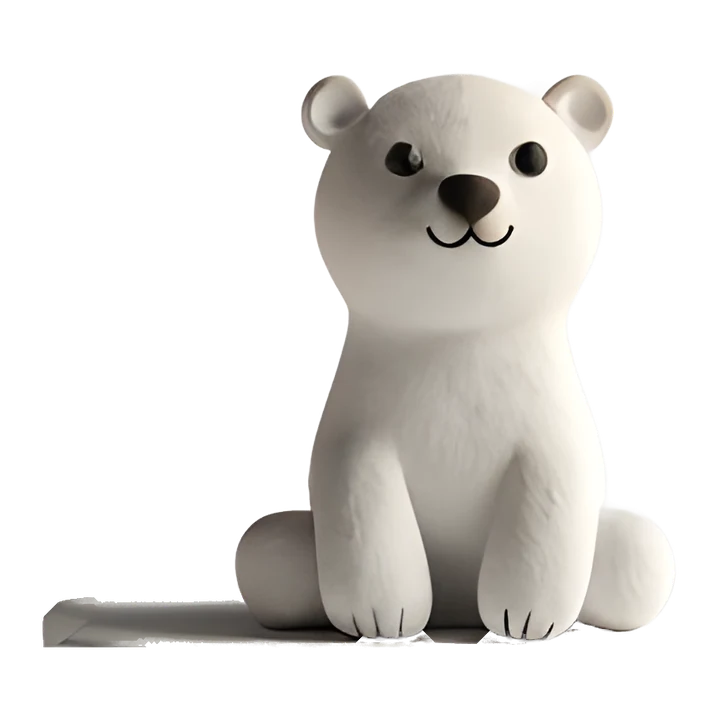
The very youngest reader gets white, cold and soft: a polar bear having a cuddle, snowflakes falling. Three- to five-year-olds love a clear journey out onto the ice and back to the warmth. School-age children can have a mission with a compass and a storm, and older children a story where the ice cracks and quick thinking is needed.
Polar bears and penguins never meet
Lots of people think polar bears and penguins live in the same place, but they never meet in the wild. Polar bears live in the Arctic, around the North Pole, while almost all penguins live in the southern half of the world. At the North Pole itself there is no land at all, only sea ice floating on a deep ocean. Freeze some water in a tub and see whether your own ice floe can carry a small toy in the sink. Near the Pole it is also light round the clock for part of the summer and dark round the clock for part of the winter.
Your child is the hero
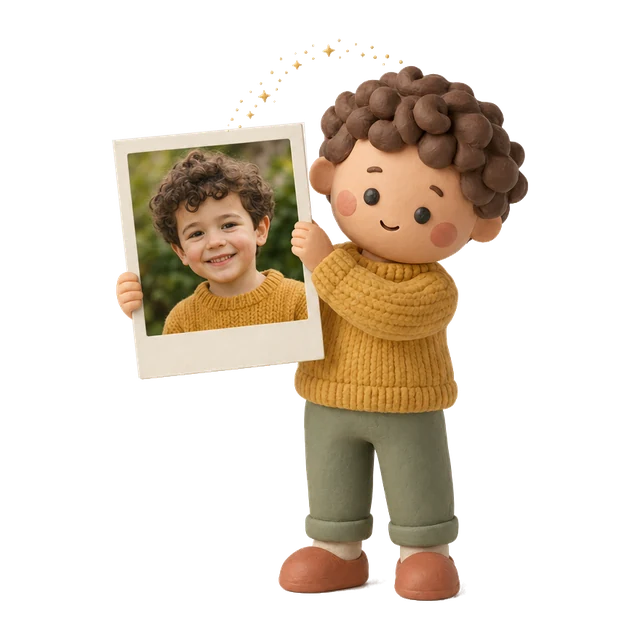
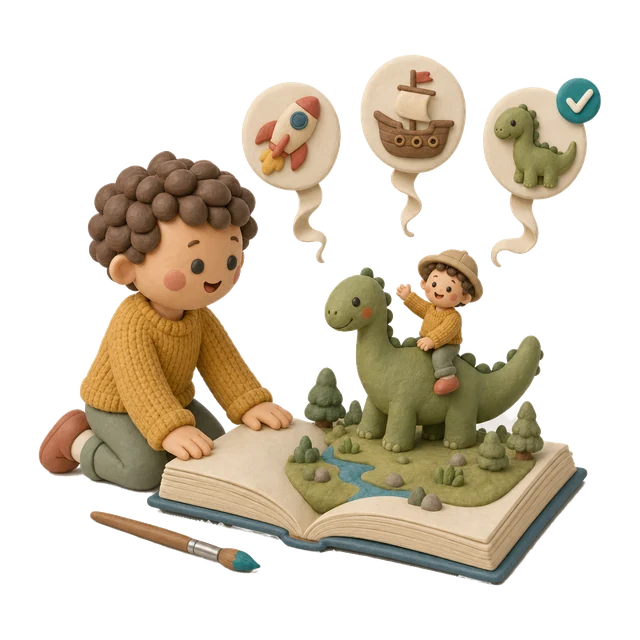
You fill in the child's name, age and what they like, and upload a photo. The story about the North Pole is written for your very own child, and the thirteen pictures and the cover are drawn from the photo in the style you choose. Brothers and sisters, parents, grandparents or the pet can come along, up to five characters. If you would like to include something that has happened lately, a trip or a lost tooth, just write it and it is woven in.
From eBook to hardback book
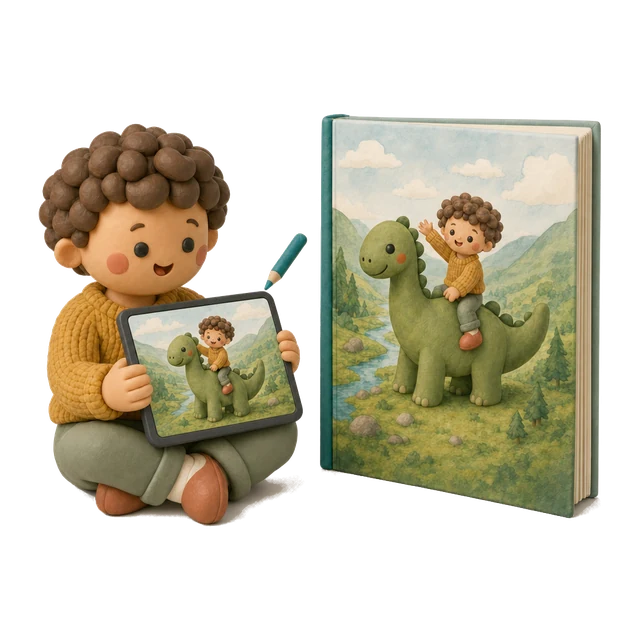
The eBook is ready a few minutes after payment. Read it, change the text and ask for new pictures until you are happy. Then order it as an A4 hardback book, printed and sent to your door, or straight to the child as a gift. Do add the audiobook or the colouring pages. Start creating the book or read more about the prices. Would you like to see a finished book before you decide? Browse our example books.
How the story could begin
The snow creaks under your boots. You're wearing three jumpers, two pairs of mittens and a hat that leaves only your eyes uncovered, and still the cold bites your nose. The dogs pulling the sledge puff out little clouds. It's the middle of the day, but there's no sun. It doesn't rise at all at this time of year, says the scientist driving the sledge. Instead the sky is dark blue and full of stars. Suddenly the dogs stop. In front of them, in the snow, sits a polar bear cub all on its own. It's smaller than you expected, with a black nose and shaggy fur, and it squeaks like a puppy. The scientist looks around. “Where's the mother?” she says quietly. The cub stands up, totters towards the sledge and sits down right in front of you.
 Christmas
 Birthday
 Unicorns
 Dinosaurs
 Pirates
 Space
 Princes and princesses
 Fire brigade
 Sport
 Mermaids
 Superheroes
 Knights and dragons
 Construction vehicles
 Starting school
 A trip to the farm
 Jungle
 Fairies
 Treasure hunt
 Underwater
 A new baby
 Brushing teeth
 Confidence
 Bedtime story
 The enchanted forest
 Witches and spells
 Giants
 Gnomes
 Wizard school
 Camping
 Time travel
 Haunted house
 Police
 Racing
 Aeroplanes
 Secret mission
 The zoo
 Dressing up
 Building a tree house
 The amusement park
 A train journey
 A visit to the doctor
 The dentist
 The library
 The beach
 The forest
 Baking
 Music
 Dance
 Ancient Egypt
 The Stone Age
 The Vikings
 In the future
 The Middle Ages
 Candy land
 At the North Pole
 The savannah
 Easter
 Halloween
 Lucia
 Midsummer
 New Year
 Name day
 Eid
 Hanukkah
 Becoming a big brother or sister
 Father's Day
 Mother's Day
 Grandparents
 A new pet
 Moving house
 Sleepovers
 A wedding
 Holiday
 Learning to ride a bike
 Giving up the dummy
 Potty training
 Tidying up
 Eating well
 Learning to tell the time
 Learning to count
 The alphabet
 Seasons and weather
 Afraid of the dark
 Tantrums
 Feeling homesick
 Being teased
 Jealousy
 Feeling proud
 Handling big feelings
 Funny story
 Olivia
 Muhammad