The whole book is drawn from a single photo, so that photo matters a great deal. It doesn’t have to be a nice one. It needs to be sharp, show the face straight on and show the child as they look on an ordinary day.
Why the photo matters so much
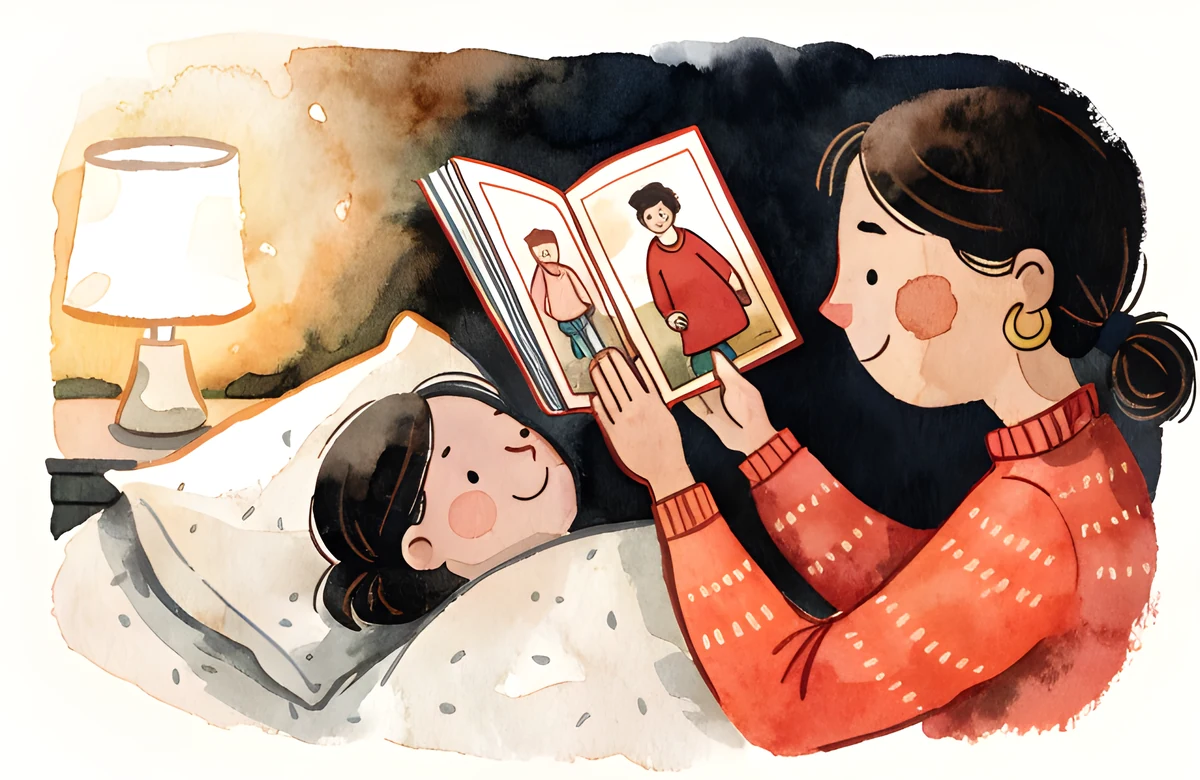
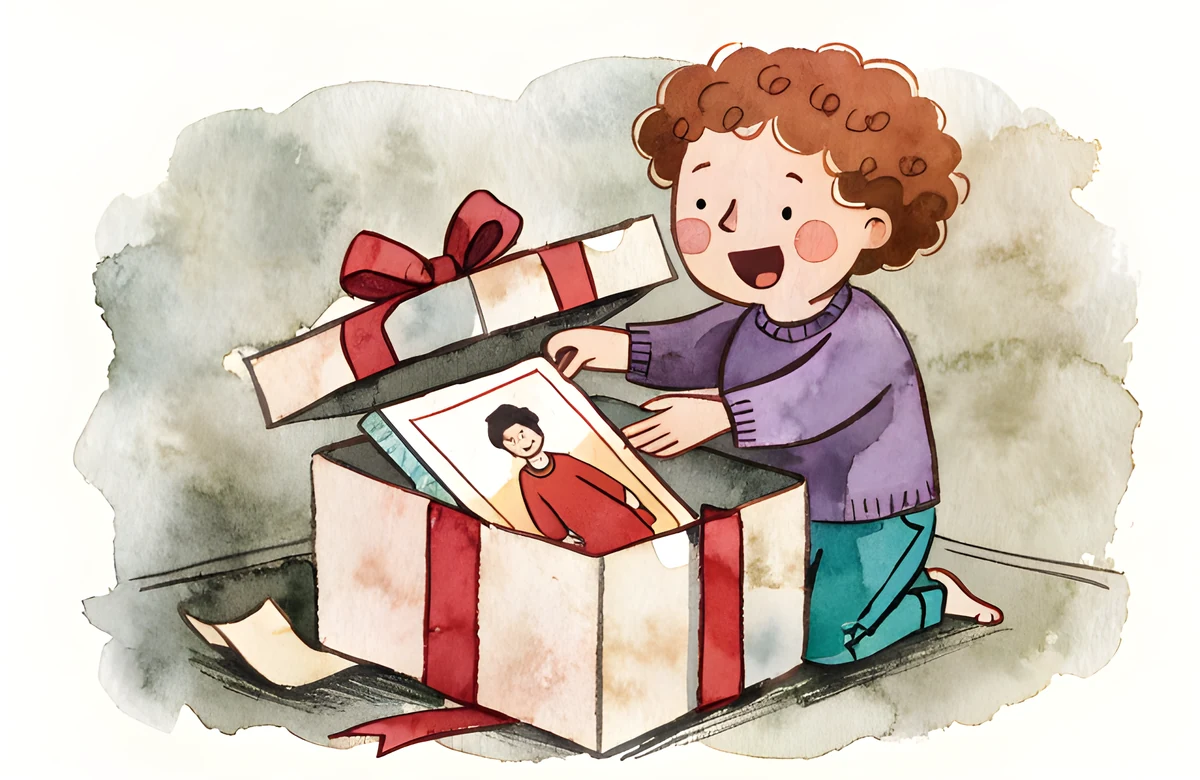
The pictures in the book are drawn by an AI from the photo and from what happens on each page. Usually the child recognises themselves straight away. But it is a drawn character, not a photograph, and it is never better than what it was drawn from. A blurry photo taken against the light gives a character that looks roughly like the child. A sharp photo by a window gives a character that is the child.
If a picture still comes out wrong, with a fringe that has grown or eyes the wrong colour, you can ask for a change or have the page redrawn. But it is easier to spend a minute on the photo at the start.
Light first
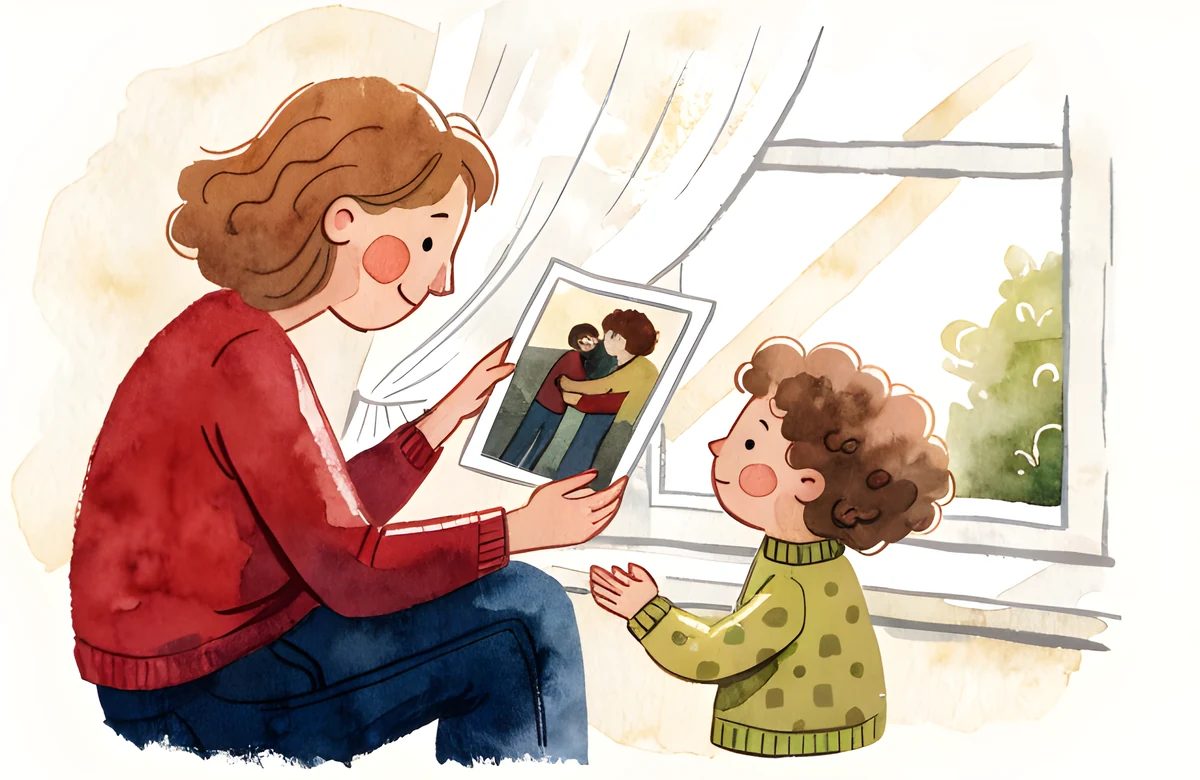
Light matters more than the camera. The best is daylight falling softly across the face, for example when the child sits a little way into the room, facing a window. Then eye colour, freckles and skin tone show as they really are.
Strong midday sun makes children squint and puts hard shadows under the nose and chin, and a shadow can end up drawn as part of the face. An overcast day outdoors, on the other hand, is excellent. The ceiling light on a November evening makes the eyes dark and everything slightly yellow, and the flash flattens the face. Better to take the picture tomorrow morning.
A simple test: look at the child’s eyes on the screen. If you can see a small point of light in both, the light is usually good.
Distance does more than you think
Crouch down so the camera is level with the child’s eyes. It sounds obvious, but most pictures of small children are taken from above, which makes the forehead large and the chin small.
Don’t stand too close either. It is the distance, not the phone, that distorts: at arm’s length the nose looks bigger and the ears disappear behind the cheeks. One study of selfies found that the nose looks about 30 per cent wider from 30 centimetres away than from a metre and a half. So stand a little way off and use your phone’s 2x mode if it has one, which on most newer phones is a lens of its own. Don’t pinch to zoom; that only makes the picture blurry.
A plain wall behind the child makes it easier to see where the hair ends than a bookcase full of things.
Stop directing
Anyone who has tried to photograph a two-year-old knows how it goes. ‘Say cheese’ produces a strained grimace, and ‘sit still’ sends the child running the other way.
Keep your phone out while the child is drawing, building with blocks or chatting to a brother or sister. When they look up, with an ordinary, slightly curious look, take the picture. Hold the shutter button down to take a burst, and you can pick the one where the eyes are open. You are not looking for the school photo but for the look you see every day across the breakfast table.
A big laugh that turns the eyes into narrow slits changes the whole shape of the face, so a small smile or a calm face gives the best likeness. Babies who can’t sit up yet are easiest to photograph lying on their back on a blanket, with you above them and the light coming from the side.
Glasses, hair and clothes
If the child always wears glasses, they are part of the face and belong in the picture. Just make sure the lenses don’t reflect the light; often it is enough for the child to lower their chin a little. Sunglasses, caps, woolly hats and dummies, on the other hand, hide what makes the child who they are. The same goes for face paint from a party and the favourite superhero top the child absolutely refuses to take off. Negotiate for one minute.
Hair is a large part of the likeness. Choose a photo where the hair looks the way it usually does. If the child has a freshly cut fringe, or usually wears two plaits, that is how it should look.
A photo each, the grown-ups too
If more people are going to be in the book, say a big sister, a grandad or the dog, upload a separate photo for each of them. In a group photo the faces are small and it is hard to tell who is who. Anyone can be described in words instead, the main character too, but with a photo they look like themselves.
Adults often forget that they need a good picture too. A crop from a holiday snap with sunglasses comes out worse than a quick picture by the kitchen window.
Pets are best photographed when they are tired, on the floor and in daylight, with the camera at their height. What matters is that their markings show: the white paw, the patch over one eye. A treat held just above the camera usually gets them looking the right way.
If a friend is going to be in the book, ask the friend’s parents before you upload a photo of their child.
Send the original and crop with a margin
Send the original file. A picture that has been through a messaging app, or that is a screenshot, has often lost sharpness on the way. Turn off filters and beauty mode; they change skin tone and eye colour. Portrait mode can take the edges of the hair with it when it blurs the background.
Crop so that only the child is in the picture, right when you upload it. If the whole body fits without the face getting small, that’s fine; otherwise head and shoulders with a little space around them is enough. Don’t cut off the chin or the hair at the edge, and remove other people completely, even an arm at the side.
A new photo is almost always better than an old one. Children change quickly, and a picture from the last few months gives a book that matches how the child looks now. When the photo is ready, you can make the book.
What happens to the photo
A photo of a child is personal, and it is reasonable to wonder where it goes. The photo is used only for your book. It is sent to our AI provider, which under contract may not use it to train its models, and the model is not told any names. We keep the photo until you delete your account.
Even so, choose a picture you are comfortable with. An ordinary everyday picture is enough, and it doesn’t need to show where you live or which school the child goes to. There is more about how photos and personal details are handled under help.
And if the child is old enough to have an opinion, let them choose the picture. A child who has been allowed to choose is usually all the more curious about the book.
Would you like to see a finished book before you decide? Browse our example books.